

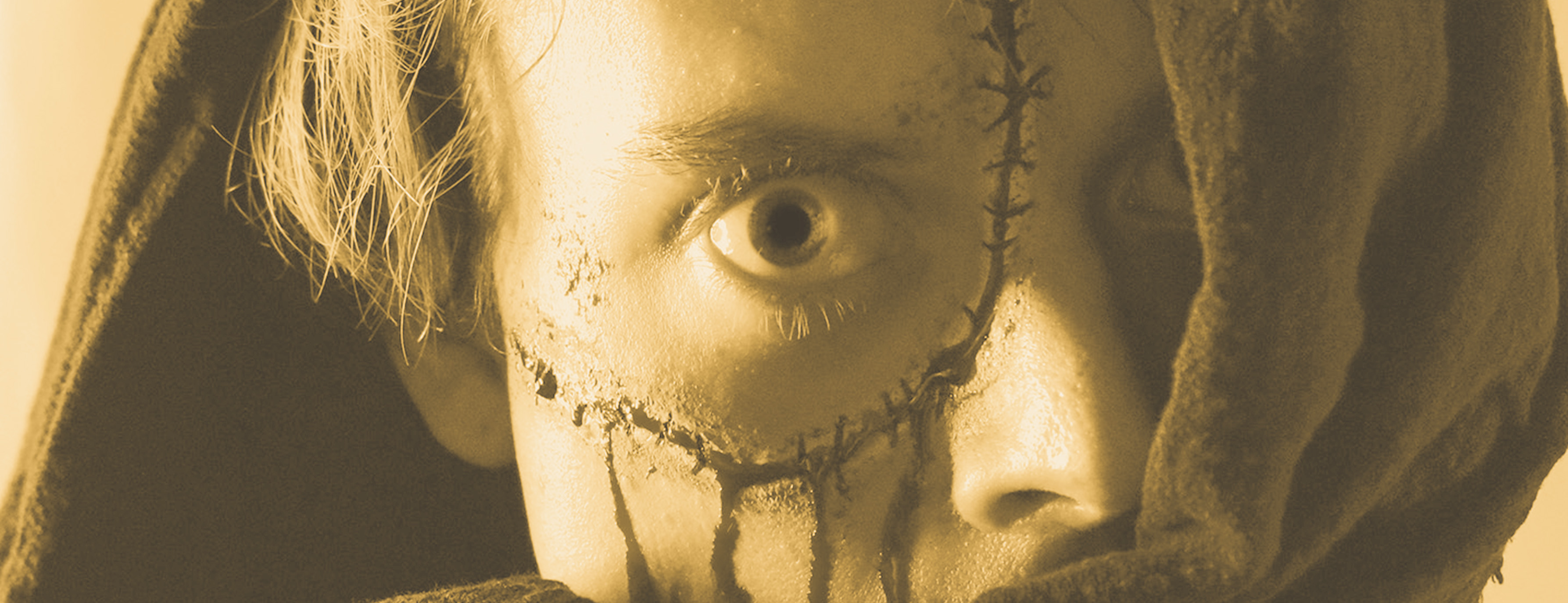
The play shifts the focus to the Creature, from his horrific birth to his desperate search for connection in a world that fears him. As he observes human interactions and acquires the power of language and thought, the creature’s innocence is shattered, leading to a dramatic confrontation with his creator, Victor Frankenstein. An electrifying tale of a living creature cast away by his creator into a hostile world, Frankenstein explores identity, rejection, and what it means to be human—issues as relevant among the technological and ethical dilemmas of today as they were when Mary Shelley wrote her famous novel more than 200 years ago.
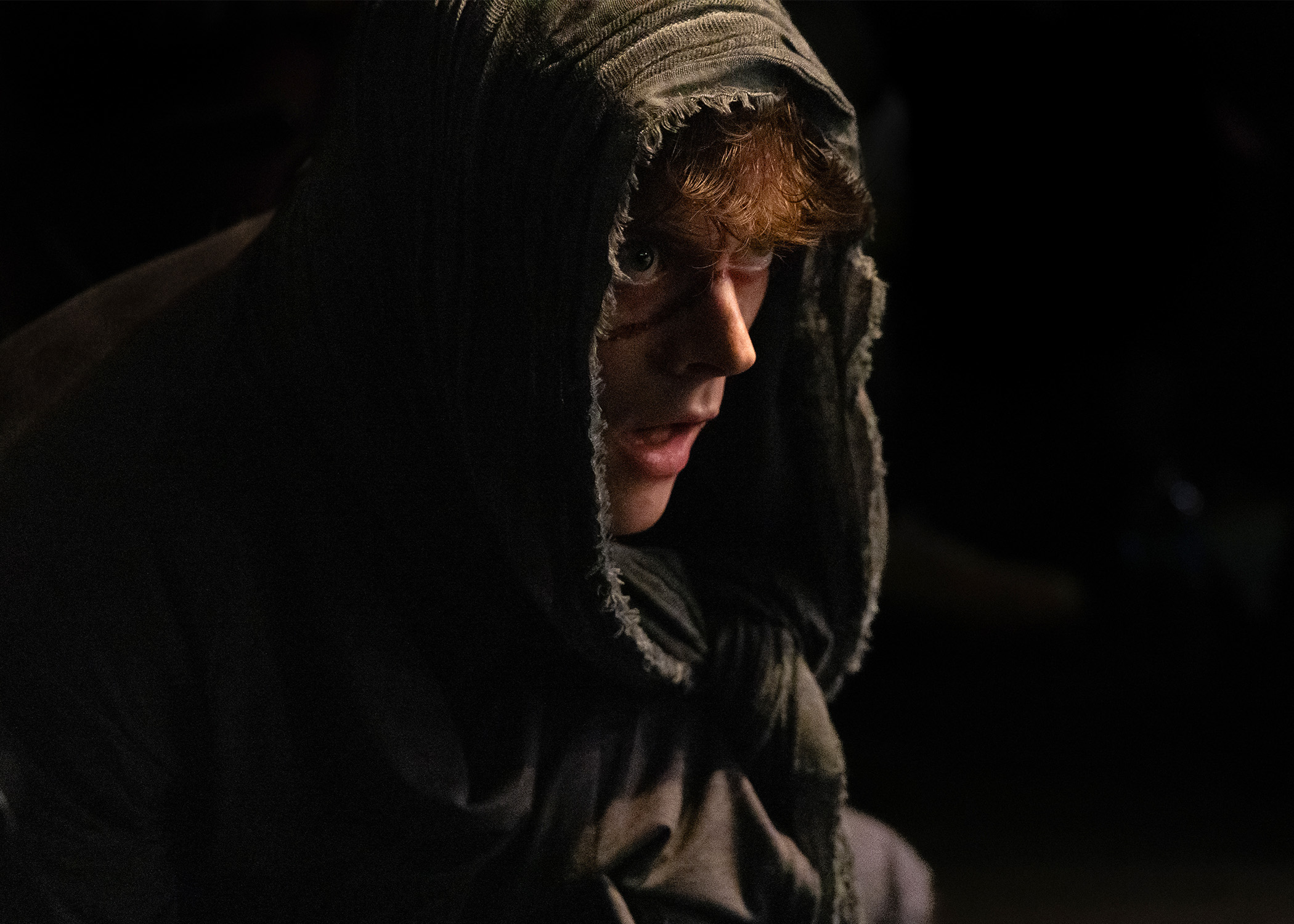
Near Switzerland, some time after August 26th, 17—
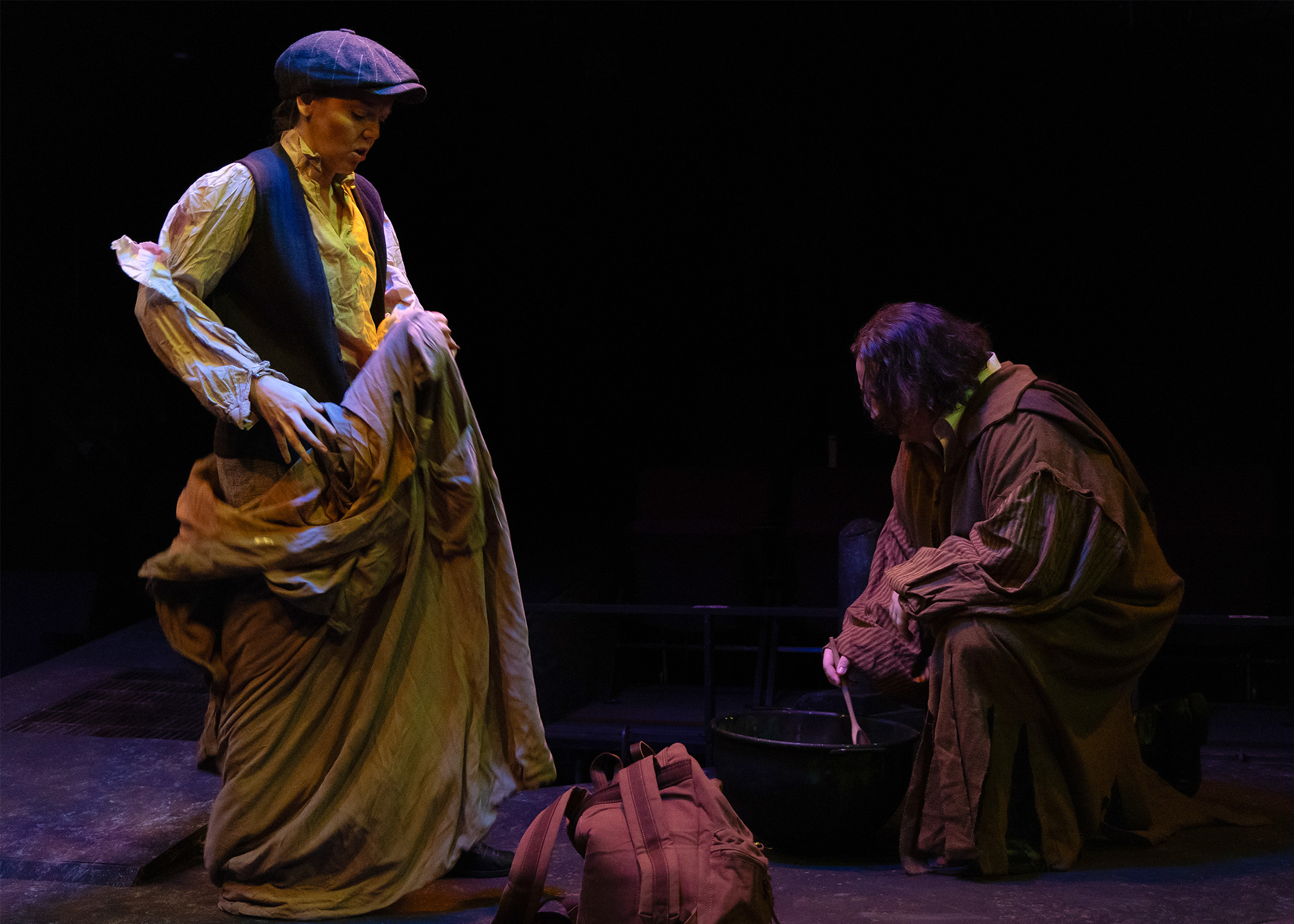
VICTOR FRANKENSTEIN
The oldest son in the Frankenstein family, the eventual husband of Elizabeth Lavenza. From childhood, Victor has a thirst for knowledge and powerful ambition. These two traits lead him to study biology at university in Ingolstadt, where he eventually discovers the “secret of life” and then uses that knowledge to create his own living being. But Frankenstein is also prejudiced, and cannot stand his creation’s ugliness. He thinks it a monster though in fact it’s kind and loving. Victor’s abandonment of his “monster” creates a cycle of guilt, anger, and destruction, in which first the monster takes vengeance upon Victor, and then Victor swears vengeance on the monster. In the end, Victor resembles the monster he hates far more than he would care to imagine.
THE CREATURE
The hideous-looking creature that Victor Frankenstein creates (though the name “Frankenstein” has become associated with the monster, the monster is, in fact, nameless). Though the monster originally wants nothing more than to be loved and accepted, it is surrounded by people who judge it as evil because of its terrible appearance while also getting a glimpse at the real world and who inhabit it. The monster is isolated and demonized by human society, and soon becomes embittered and enraged at his treatment. Eventually, the monster becomes a killer, not from a criminal thirst to hurt, but from a desire for revenge against Victor and all of humanity for rejecting him.
ELIZABETH LAVENZA
Victor’s cousin who is also a mother-figure to him ever since his mother passed away. Victor and her are set to marry until tragedy strikes the Frankenstein household and the ceremony has to be paused. She is assertive but angelic above all else.
DELACEY
A blind old man who lives in exile with his children Felix and Agatha in a cottage and a forest. As a blind man, Delacey can’t perceive the monster’s wretched appearance and therefore does not recoil in horror at his presence. He represents the goodness of human nature in the absence of prejudice.
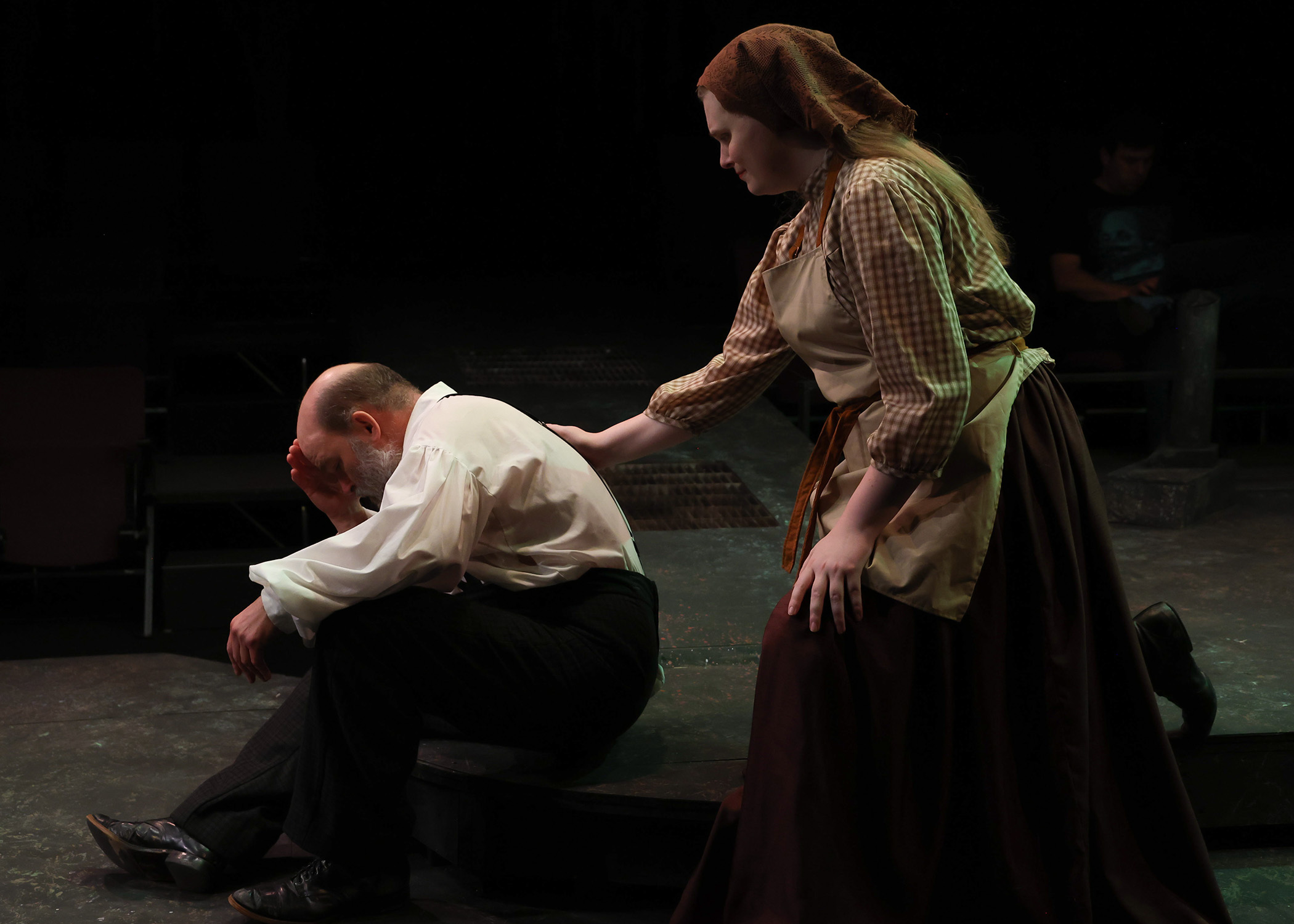
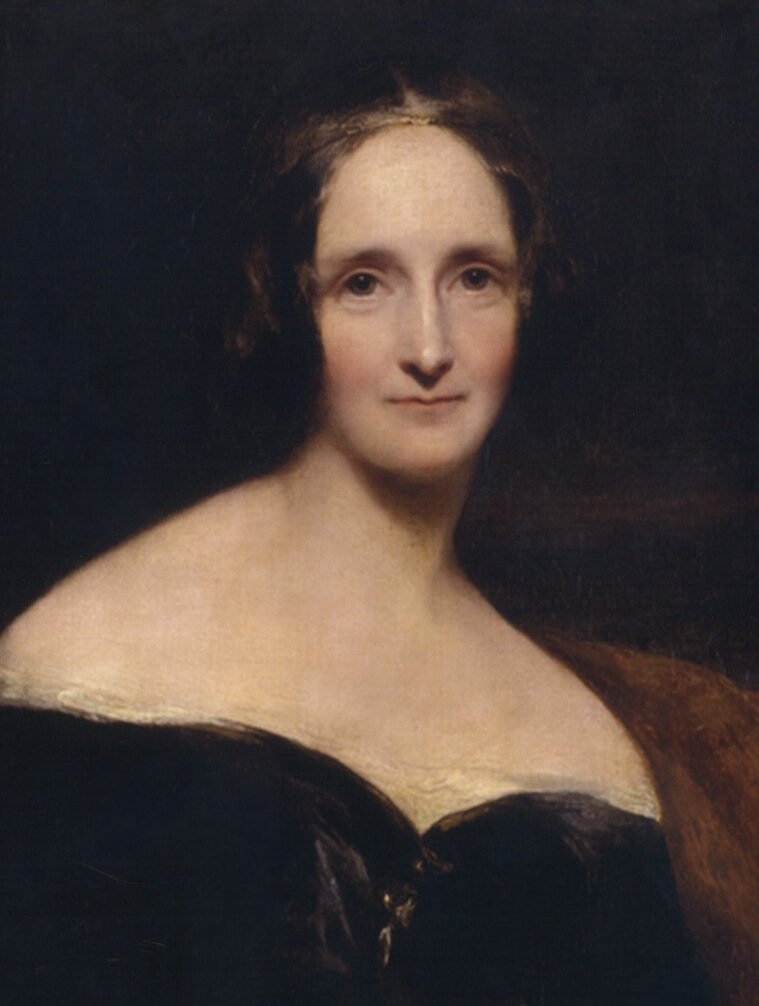 Mary Shelley was born on born August 30, 1797, in London, England.
The only daughter of William Godwin and Mary Wollstonecraft, she met the young poet Percy Bysshe Shelley in 1812 and eloped with him to France in July 1814. The couple were married in 1816, after Shelley’s first wife had committed suicide. After her husband’s death in 1822, she returned to England and devoted herself to publicizing Shelley’s writings and to educating their only surviving child, Percy Florence Shelley. She published her late husband’s Posthumous Poems in 1824. She also edited his Poetical Works released in 1839, with long and invaluable notes, and his prose works.
Mary Shelley’s best-known book is Frankenstein; or, The Modern Prometheus released 1818 and revised in 1831, a text that is part Gothic novel and part philosophical novel. It is also often considered an early example of science fiction. It narrates the dreadful consequences that arise after a scientist has artificially created a human being. The man-made monster in this novel inspired a similar creature in numerous American horror films. She wrote several other novels, including Valperga (1823), The Fortunes of Perkin Warbeck (1830), Lodore (1835), and Falkner (1837); The Last Man (1826), an account of the future destruction of the human race by a plague, is often ranked as her best work. Her travel book History of a Six Weeks’ Tour (1817) recounts the continental tour she and Shelley took in 1814 following their elopement and then recounts their summer near Geneva in 1816.
Mary Shelley passed away on February 1, 1851. Her The enduring legacy and power of Frankenstein has inspired countless adaptations in film, television, and theater.
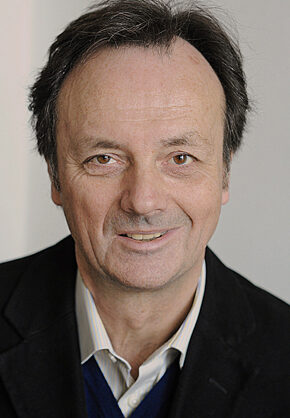 Nick Dear was born June 11, 1955, in Portsmouth, England, and grew up along the coast in Southampton. In 1977 he graduated from the University of Essex with a BA in Comparative European Literature. Whilst at Essex, Nick became interested in theatre, beginning with a career-defining role as the Second Murderer in Macbeth. He soon realized he was not going to be an actor, and by the time he left Essex, he had written his first play.
Between 1978 and 1986 he lived in Yorkshire, where he held down a variety of unlikely jobs whilst embarking on a series of plays for BBC Radio, and early outings in the theatre. He was Writer-in-Residence at the University of Essex in 1985, and at the Royal Exchange Theatre, Manchester, in 1987-8. His breakthrough came in 1986 with the production of The Art of Success at the Royal Shakespeare Company in Stratford-upon-Avon. Subsequently he has sustained a full-time career as a playwright and screenwriter.
His adaptation of Mary Shelley’s Frankenstein, directed by Danny Boyle at the National Theatre starring Benedict Cumberbatch and Jonny Lee Miller, became one of the first successes of NT Live, and has since been seen by a vast audience internationally.
“Und die Furcht wächst in die Nacht… Alle haben Angst vorm schwarzen Mann.” Since I was a kid, I’ve been obsessed with “monsters”.
Whether it was Grover, and the other residents of Sesame Street teaching me from a young age, to the Hulk and other unorthodox superheroes, taking me on adventures full of inspiration, to Jason Voorhees, and the slasher icons of the 1980’s who helped me face my fears and grow into a more curious adult, I have always found myself rooting for the outcasts, the overlooked, the ones who don’t fit neatly into societies boxes. So, it should come as no surprise that one of my favorite stories came from a novel about a “monster”.
At the core of this story, I found myself face to face with a fundamental question: “What makes a monster?” Is it the product of a broken mind, twisted by hubris and ego, shattered before it ever even existed? Are humans born to be monsters? Or is it the product of a broken world, a society demonizing those who don’t make sense to them, villainizing people for merely existing differently, forced to destroy in order to survive? Are humans made to be monsters?
As I looked at this story through the lens of today, I saw monsters everywhere. We make monsters without knowing it, and those monsters are running free. Whether it’s through actions and reactions, vitriol and vices, how we show the world the evils that men do, or how we hide them both from each other, and from ourselves. It’s impossible to not see that man IS the monster of this story.
Tonight I ask for one thing: that you listen, witness the tragedy presented before you, and understand that this is not an old story to be left behind. This story is in front of us. These two souls, destined to destroy each other for eternity, continue to battle. They have different names, but the struggle is still here, still relevant to our own struggles.
If we take nothing else from this story, let us take this lesson: learn from this tragedy; Go forward with the goal to create fewer monsters.
Welcome to the story of a monster; a monster who created a man, just to prove he could, and in the process threw away his humanity. Welcome to the story of a man, driven through fear, anger, hate, and suffering, both his own and that of the world around him, and in process had no choice but to accept his broken humanity.
Welcome to Frankenstein.
– Preston Loomer (Director)
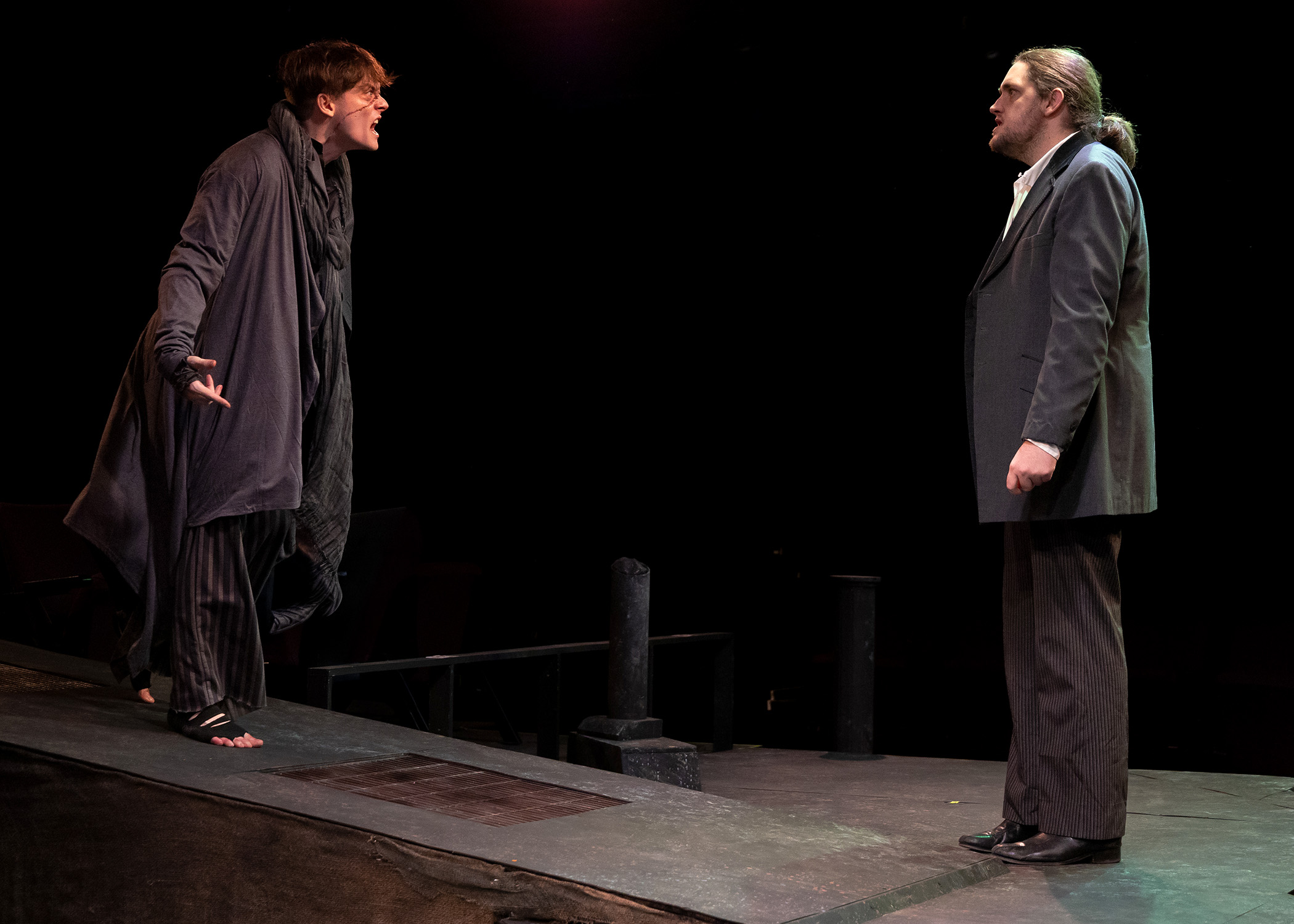
Archival Photos by Marlee Melinda Andrews