


By Tennessee Williams, one of the greatest 20th century American playwrights, The Glass Menagerie, an intimate and beautiful story about family, dreams and the weight of the past, resonates across generations with deeply relatable characters and emotions. Amanda Wingfield only wants the best for her two children, Tom and Laura. With her socialite adolescence behind her, Amanda puts all her energies into pushing her children up the social and financial ladder from which she has fallen. Shadowed by the absence of a father, they struggle to break free from their mother’s imposing ways.
Considered one of the most significant plays in the American theatre canon, The Glass Menagerie premiered on Broadway in 1945 and became an instant commercial and artistic success that established Tennessee Williams’ reputation as a playwright. The play and its characters are based on Williams’ life and family. As a young man, he was employed by the International Shoe Company in St. Louis, the same place Tom Wingfield works in the play.
The Glass Menagerie is the most revived play on Broadway in the last 70 years (followed by Williams’ A Streetcar Named Desire). This is Civic’s fourth production; last produced in 1999, starring the late Patty Duke.
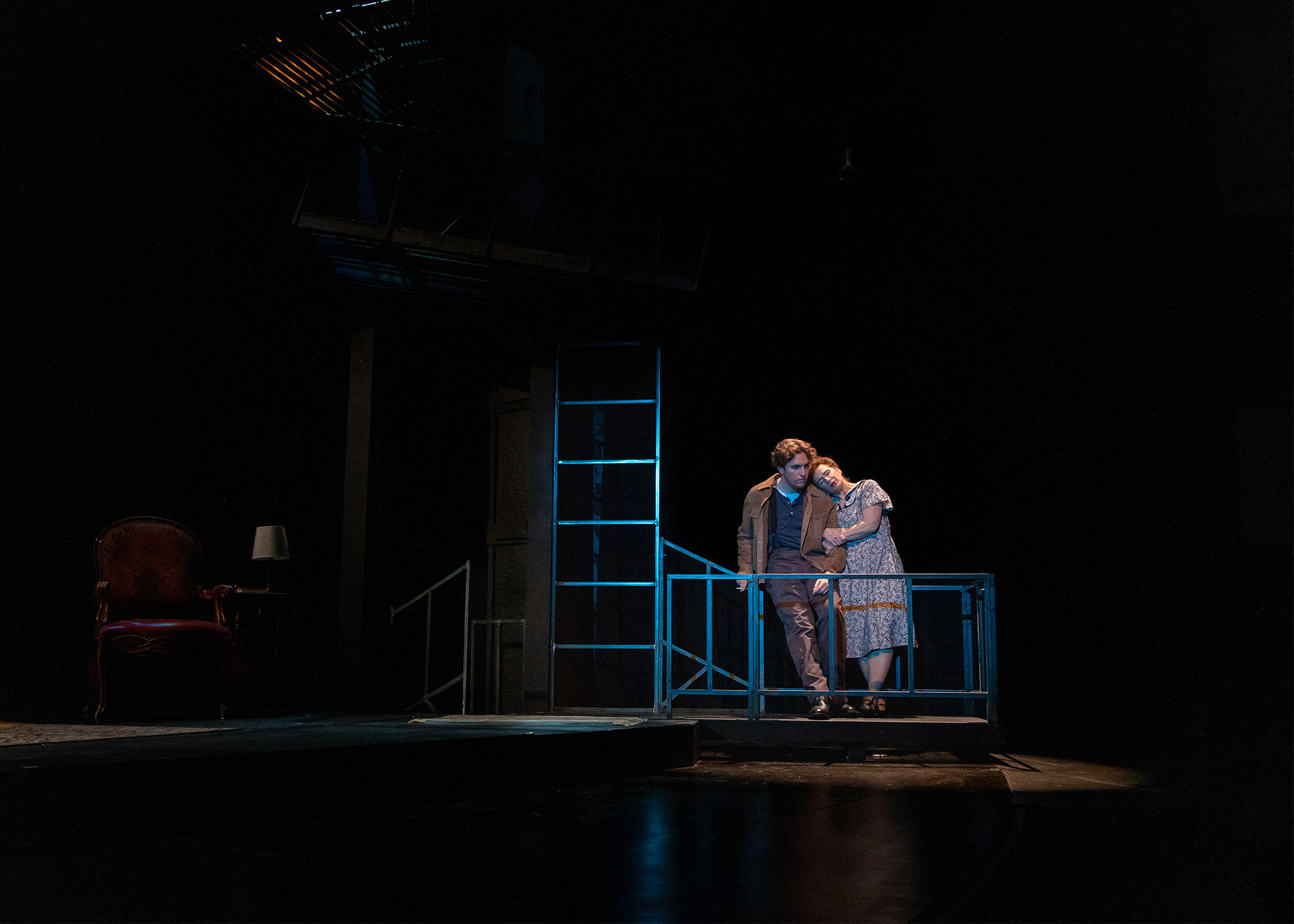
An alley in St. Louis – Now and the Past
“Now” being around mid 1940s and “the Past” being late 1930s
AMANDA WINGFIELD
A little woman of great but confused vitality clinging frantically to another time and place. She is not paranoiac, but her life is paranoia. There is much to admire in Amanda, and as much to love and pity as there is to laugh at. Certainly she has endurance and a kind of heroism, and though her foolishness makes her unwittingly cruel at times, there is tenderness in her slight person.
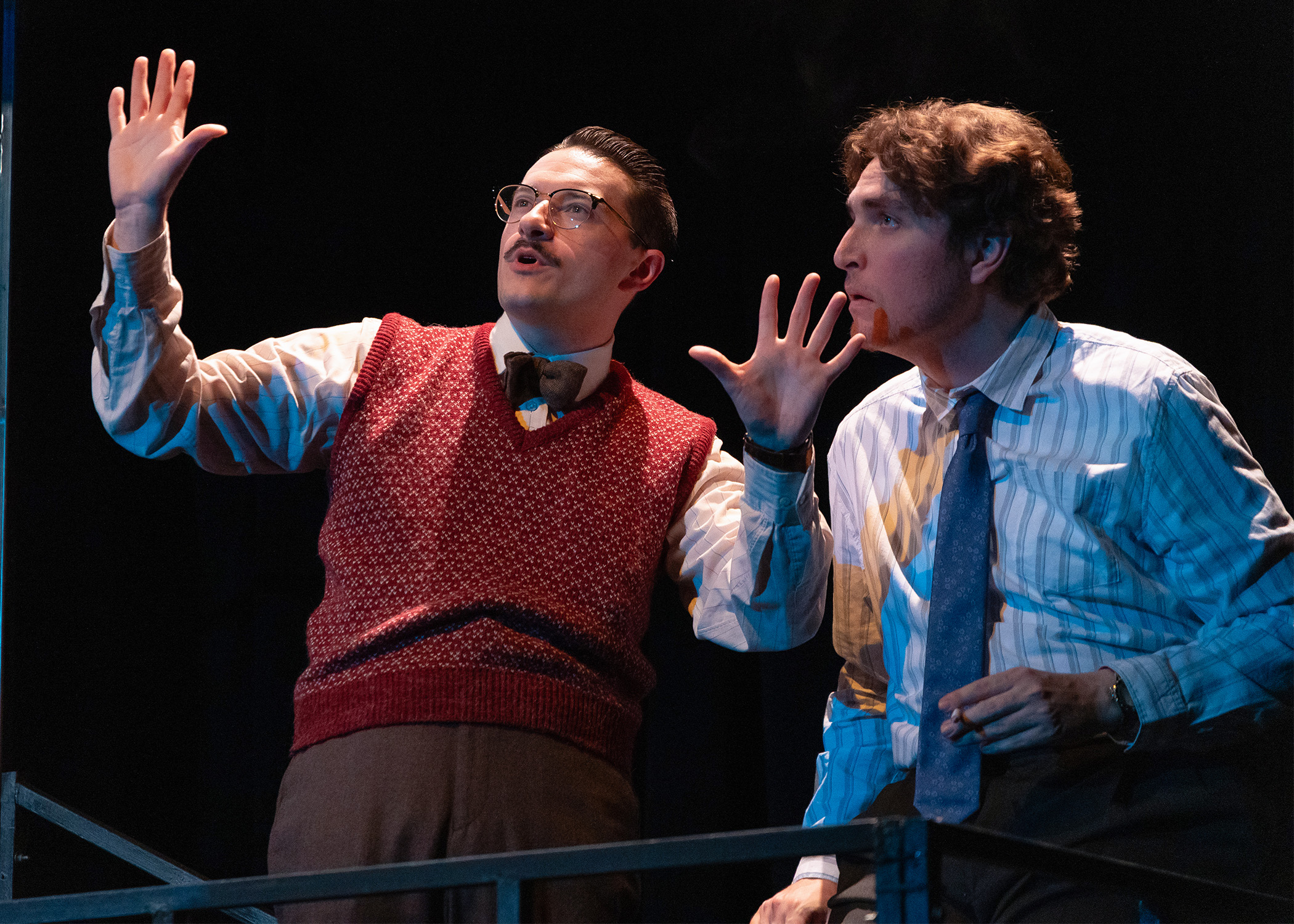
TOM WINGFIELD
The narrator of the play. A poet with a job in a warehouse. His nature is not remorseless, but to escape from a trap he has to act without pity.
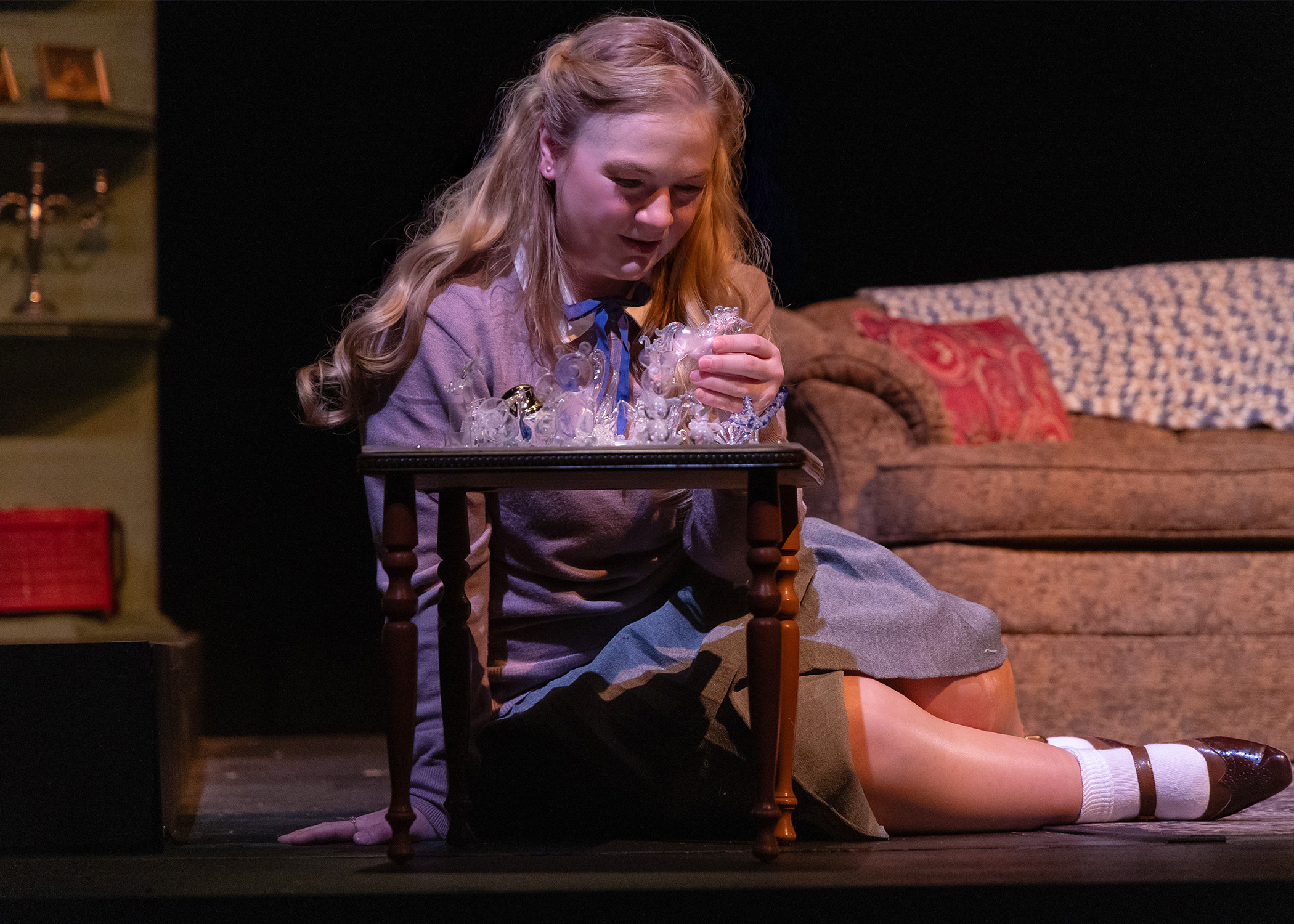
LAURA WINGFIELD
Amanda, having failed to establish contact with reality, continues to live vitally in her illusions, but Laura’s situation is even graver. A childhood illness has left her crippled, one leg slightly shorter than the other, and held in a brace. Stemming from this, Laura’s separation increases till she is like a piece of her own glass collection, too exquisitely fragile to move from the shelf.
THE GENTLEMAN CALLER
A nice, ordinary, young man.
Origins
During the 1930s, American theater was changing into a serious art form. In 1945, Mississippi native Tennessee Williams traveled to New York City with his lyrical, poetic The Glass Menagerie and changed how American plays looked and sounded. Williams created a colorful cast of outcasts and escapists—characters who invent beautiful fantasy worlds to survive their difficult and sometimes ugly lives. He also used unconventional techniques to get to what he said was “a closer approach to the truth.”
The play opens with Tom Wingfield—the narrator and Williams’ alter ego—telling us: “Yes, I have tricks in my pocket, I have things up my sleeve. But I am the opposite of a stage magician. He gives you illusion that has the appearance of truth. I give you truth in the pleasant disguise of illusion.” With these words, Williams clues us into his writing process.
Why the Story Endures
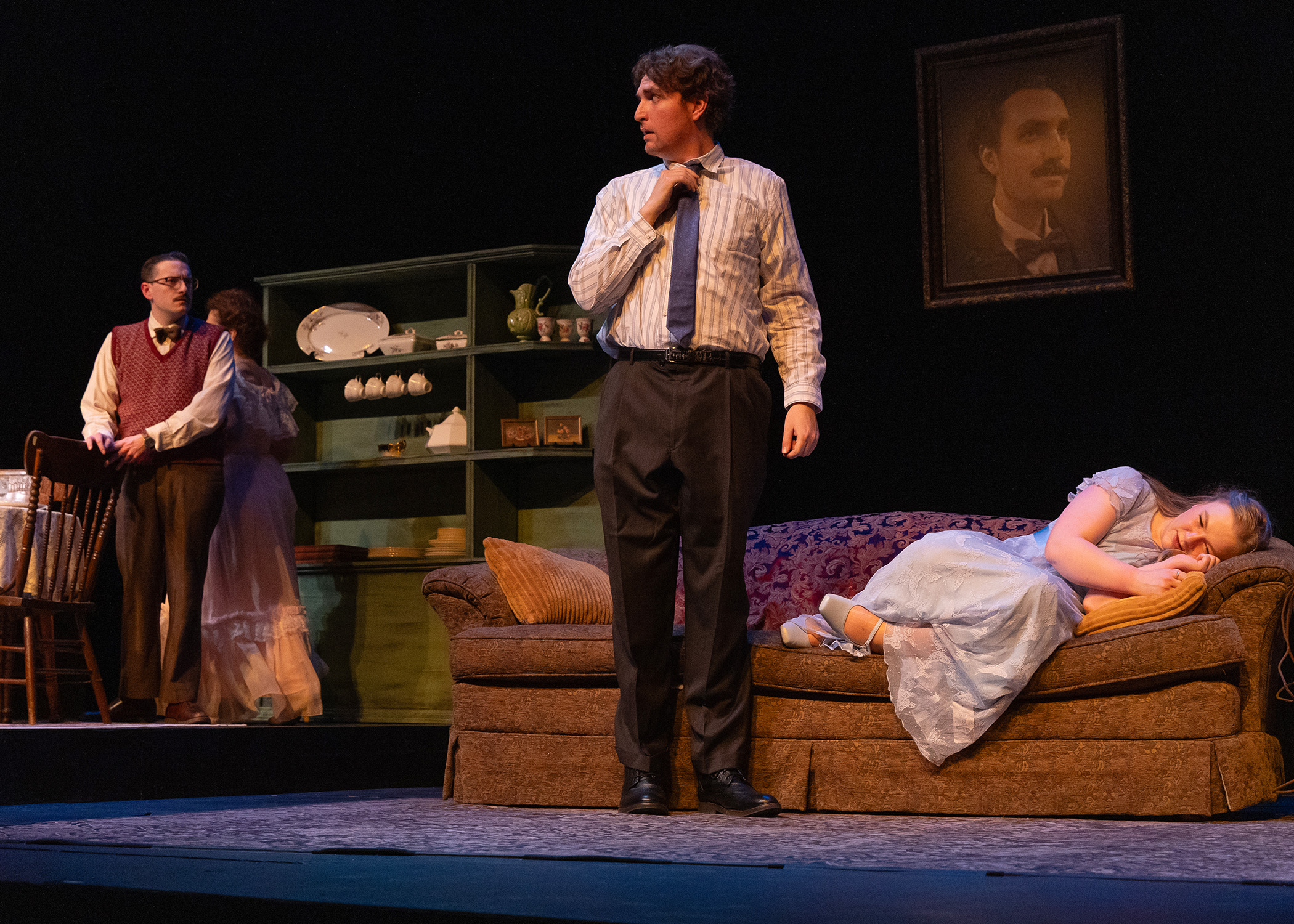
The Glass Menagerie unfolds as Tom Wingfield remembers his past, his mother Amanda, and sister Laura. There is no father in the play, as Amanda’s husband deserted the family years before. In fact, the only sign of Tom’s long-absent father is an enormous portrait of him that hangs in the Wingfield apartment.
Amanda longs for her youth and constantly talks about the string of gentlemen callers who would frequently visit her when she was a young Southern belle. And she is obsessed with finding a suitor for Laura, her crippled, insecure daughter. In order to expose Laura to the wider world, Amanda has enrolled her in a business college. But Laura, self-conscious about her limp, wants nothing more than to stay home and spend time with her collection of small glass animals—her glass menagerie.
Amanda learns that Laura has dropped out of business college and has been wandering the city, too shy to continue her studies. Alarmed, Amanda decides that Laura’s last hope for a successful life is to get married. She tells Tom to find a suitable young man for Laura. He makes plans to bring home Jim, an acquaintance from work. Amanda is thrilled and plans a dinner for the four of them. Laura quickly realizes that Jim is the boy whom she loved in high school—though Jim never even noticed her. After dinner, Jim and Laura are left alone in the living room, talking intimately. They dance, and Jim accidentally knocks over and breaks one of Laura’s glass animals—a unicorn. Jim kisses Laura, then admits that he has a serious girlfriend. Laura is devastated, but gives Jim the broken unicorn as a souvenir of their evening together.
Amanda blames Tom for introducing Laura to an engaged man. As Amanda comforts Laura, Tom steps onto the fire escape to watch them. Will he finally leave his family once and for all? Will Amanda and Laura continue to live in their suffocating dream-world? Will this family ever tell their secrets and truths to each other?
Or are they doomed to continue to delude each other—and themselves?
Archival Photos by Marlee Melinda Andrews